Airbnb Case Study
Airbnb, as one of the largest digital platforms offering accommodation to individuals, wants to expand its business by giving users the possibility to share accommodations with other people.

Our target
Our goal is to create a functionality that allows users to be able to search for accommodation sharing with other strangers, based on the age and tastes configured by the users. A matching algorithm.
With this we intend to be pioneers and position ourselves as the No. 1 app in shared accommodation rentals.
Research
During the last year, shared apartments have increased by more than 30%.
Why?
Over the last few years, shared apartments have grown considerably as rental prices continue to rise and people look for more affordable housing solutions. At the same time, teleworking has become increasingly common, allowing more people to work while traveling from one place to another.
This shift has also contributed to the rise of platforms like WeRoad, where users join trips with people they don’t know but share similar interests. Given this strong growth across these areas, we believe that introducing this new functionality will allow us to broaden the focus and reach of our platform.
We analyze Badi
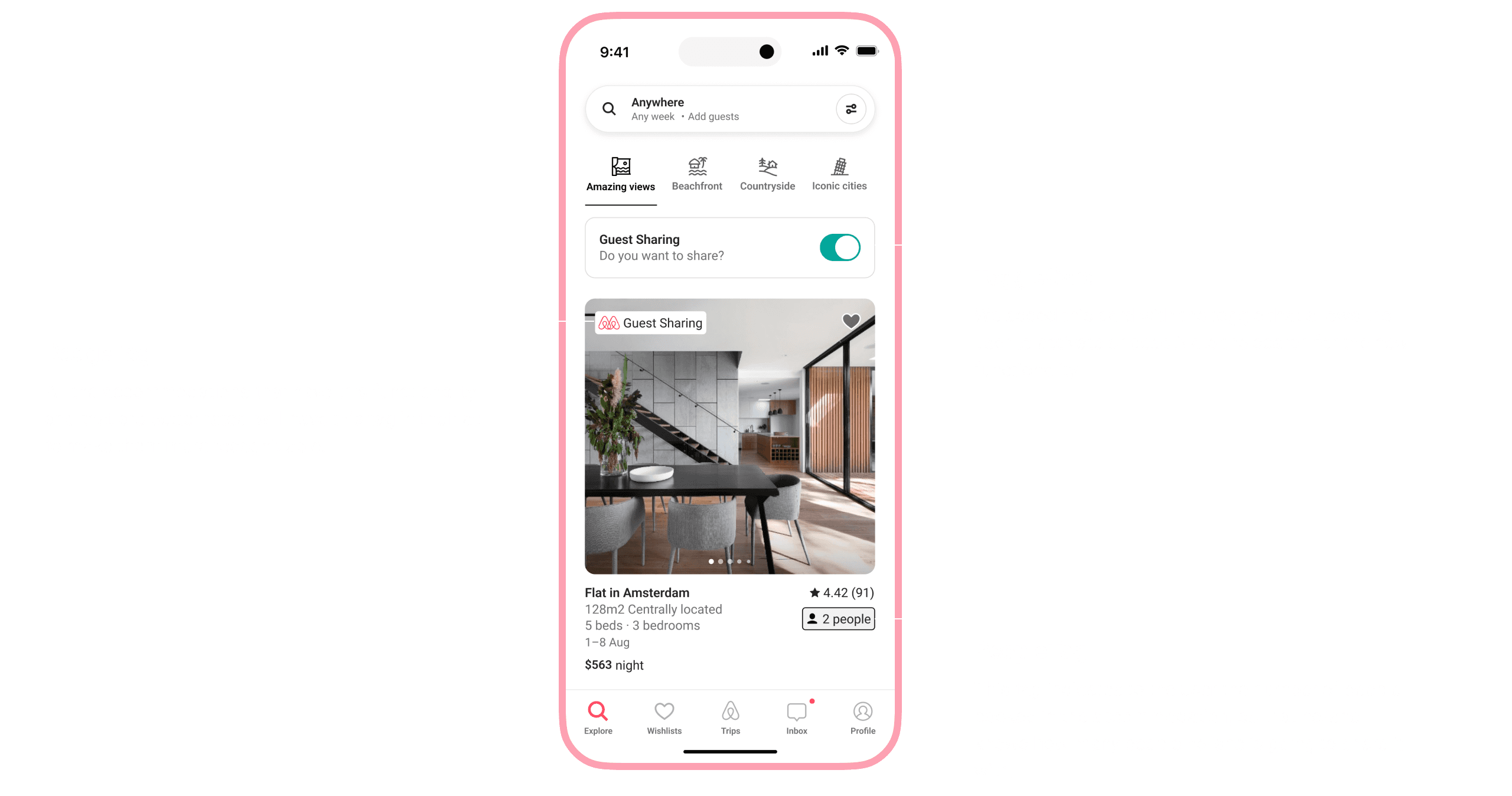
Badi is an app that facilitates contact between people who are looking for an apartment to share or who have an apartment available to rent by rooms. It is not a direct competitor but it will help us to analyze the process they use to match people who are going to share an apartment. Among its functions, we analyze several key points to take into account: We create the GuestSharing Concept.
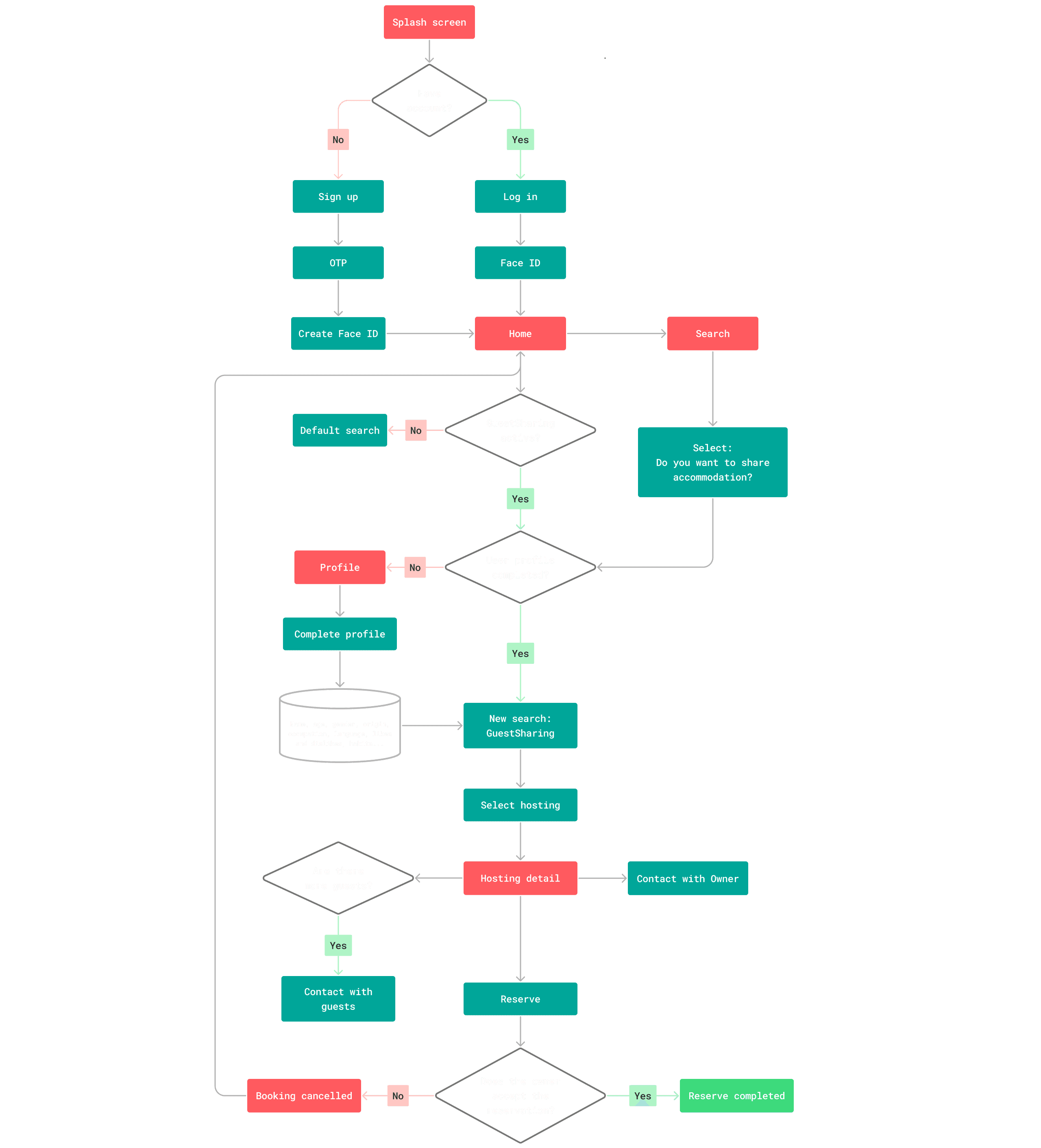
User story and user flow
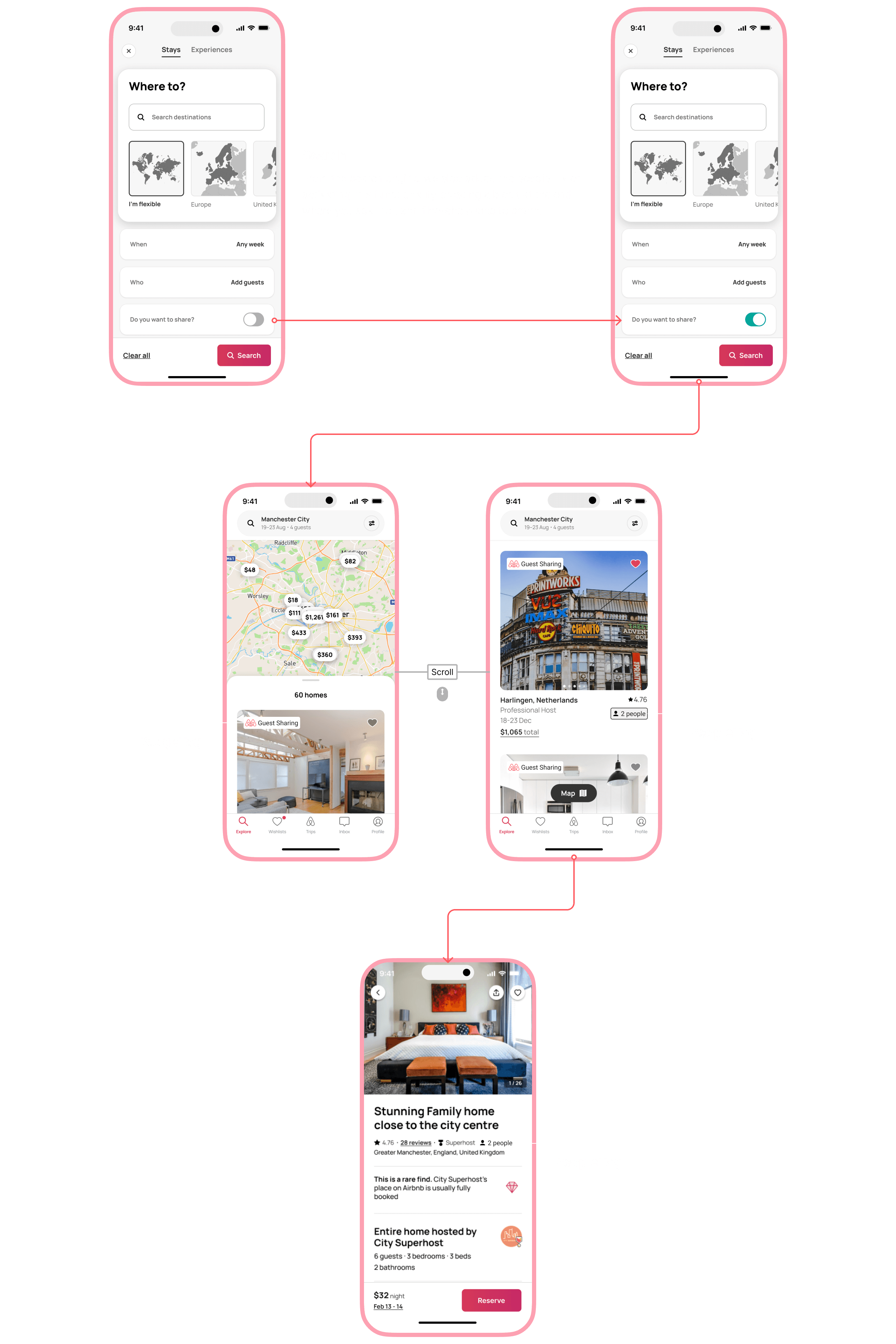
As an Airbnb user, I want to book an accommodation in the app and share it with other users, so I can save money as this functionality is more affordable.
I want to share the accommodation with like-minded people, based on the likes and dislikes I have filled in my Airbnb profile.
I want to see how many spaces are available and occupied by accommodation and contact the other users if they already have a confirmed reservation.
The host always has the last word and is the one who has to accept the reservations of all users.